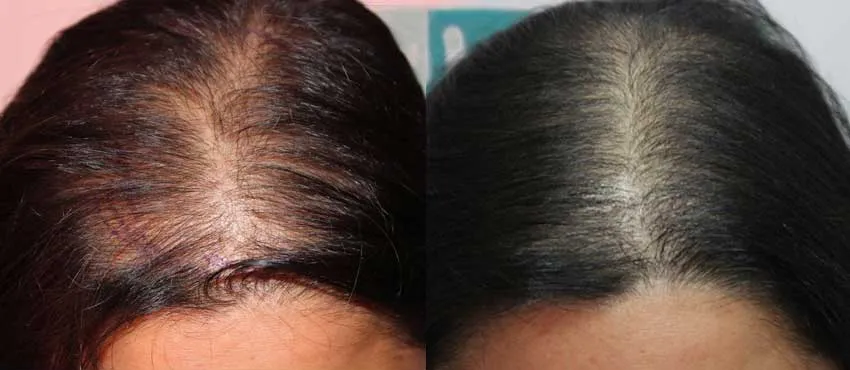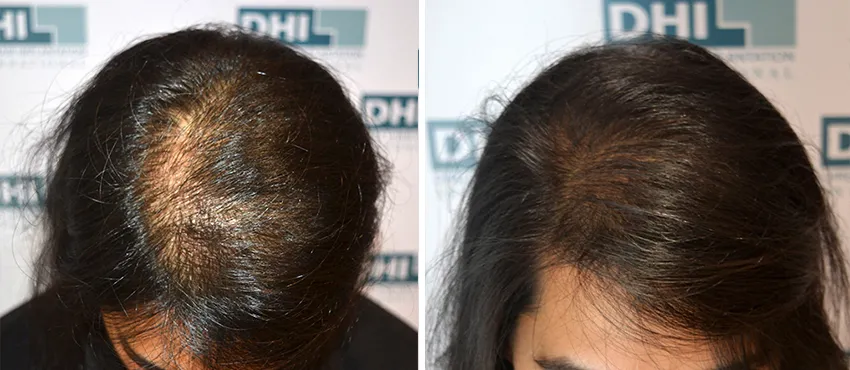
Hair loss in women is more common than most people realize, yet it rarely gets the same attention as male pattern baldness. It can begin at any age and often carries an emotional weight that goes beyond the physical change. It has a huge impact on a woman's confidence and how she sees herself every day. Female hair loss stems from a mix of physiological and psychological triggers, which is why no two cases look quite the same.
At DHI®, we have spent years studying and refining hair restoration treatments built specifically for female hair loss. Additionally, with the DHI® Total Care System, every woman receives consistent, high-quality care from her first consultation through her final results.
Female Pattern Hair Loss (FPHL) or female baldness is one of the most common reasons women lose hair. It differs from the typical pattern of male baldness. Instead of a clearly receding hairline, FPHL usually causes gradual thinning across the top of the scalp, with the central part becoming wider. The frontal hairline may remain relatively intact, although this can vary from person to person. This gradual change can make FPHL easy to overlook in its early stages, as the first sign may simply be a noticeable reduction in hair density.
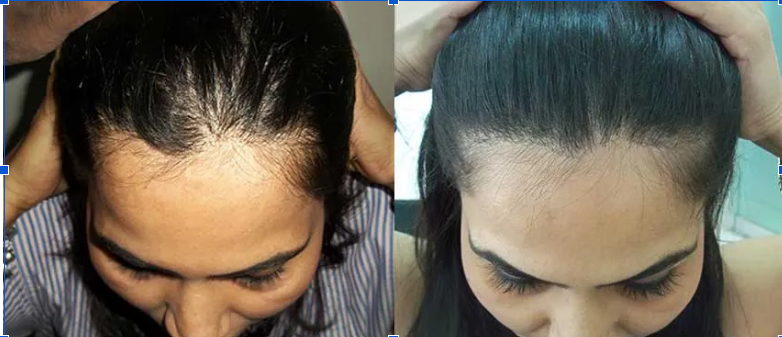
Here’s what happens in FPHL. Hair grows from tiny follicles in the scalp, and affected follicles can gradually become smaller over time. Each new strand may grow progressively finer and shorter. This can make the hair appear less dense. Genetics play an important role in FPHL, and women with a family history of pattern hair loss may be more likely to develop it. Hormonal changes may also influence hair loss in females, during periods such as menopause.
Female baldness does not follow one single pattern. Some women notice thinning mostly at the part line, while others see it spread more broadly across the scalp. Recognizing hair loss for female patients early, rather than waiting for it to become visible, gives treatment a much better chance of success.
There can be several causes of hair fall in females, and the underlying factors can vary from person to person. Genetics, hormonal changes, nutritional deficiencies, certain medical conditions, medications and physical or emotional stress can all contribute to hair loss. Identifying the underlying cause usually requires a proper assessment of medical history, symptoms and hair loss patterns.
Hormonal changes can severely affect the hair growth cycle and contribute to hair fall in females. A lot of hair thinning in women comes down to androgenetic alopecia, and it's closely linked to falling estrogen levels. Estrogen actually helps protect your hair follicles, so when it drops, whether that's just from getting older or from a bigger hormonal shift, your hair can start thinning faster than it used to.
Your body can also trigger hair loss on its own, without any hormone changes involved. Big physical events like surgery, sudden weight loss, anemia, childbirth, or menopause can push your body into a shedding phase called telogen effluvium. Your body treats the stress as a signal to pause hair growth for a while. And it's not just physical stress. Work pressure, anxiety, grief, or just going through a genuinely hard stretch of life can throw off your hair cycle almost as much as an illness would.
Diet and medication can also contribute to hair loss in females. Iron deficiency, restrictive dieting and certain medications may lead to increased shedding or thinning. Thyroid disorders and autoimmune conditions can also be underlying factors. Identifying the cause may therefore require a detailed medical history, assessment of symptoms and appropriate diagnostic tests.
Female hair thinning tends to develop gradually, so the early warning signs are easy to miss. Paying attention to small changes can make a real difference in how effectively it can be treated.
The first thing most women notice is their part. It starts looking a little wider than it used to, like there's more scalp showing than there should be. You might also start seeing more hair than usual in your brush, in the shower drain, or on your pillow in the morning. It's easy to brush off at first, but if it happens frequently, it's worth paying attention to.
A female losing hair may also notice her scalp becoming more visible under bright light or when hair is wet. Also, individual strands may feel finer or more fragile than before.
None of these signs mean the situation is permanent. But catching female hair thinning early, rather than dismissing it as a bad hair day, opens the door to a wider range of treatment options.
Not every hair loss solution for female patients funnels down to a surgery. The right approach depends on personal preference, the cause and the extent of thinning.
Non-surgical options for hair loss in women include medicated topical treatments, laser therapy, PRP injections, and lifestyle or nutritional adjustments. These work best for early-stage thinning or hair loss linked to temporary triggers like stress or hormonal shifts, and they generally involve minimal downtime.
Surgical solutions for hair loss for women, on the other hand, are usually recommended when thinning has progressed and follicles have stopped producing hair on their own. Direct Hair Implantation , or DHI®, is an ideal surgical option here because it's scar-free and delivers natural-looking results that last. A proper evaluation helps determine which path, or combination of paths, suits each woman best.
Female pattern hair loss is generally classified using the Ludwig Scale, which tracks progression in three main types.
Understanding where thinning falls on this scale helps determine which treatments to go for at that point.
DHI®, or Direct Hair Implantation , is one of the most advanced solutions available for female hair loss today. Unlike traditional transplant methods, DHI® does not require any cutting, stitching, or slitting of the scalp, which makes it a scar-free and minimally invasive option well suited to women's hair restoration needs.
In this procedure, a patented DHI® Implanter is used to extract healthy follicles from a donor area and place them directly into thinning or balding regions. This precision allows surgeons to carefully control the angle, depth as well as direction of each implant. This is essential for recreating natural hair density, particularly along delicate areas like the part line.
Local anesthesia keeps the process comfortable throughout, and because there are no incisions to heal, downtime is minimal compared to older techniques. Extracted follicles are stored in Hypothermosol during the procedure. This step significantly improves graft survival. DHI® reports survival rates of over 97 percent, well above the industry average of roughly 50 percent.
For women dealing with female hair loss, this combination of precision, minimal invasiveness and strong graft survival makes DHI® a reliable long-term solution. Full results typically become visible within nine to twelve months, as implanted follicles settle into their natural growth cycle.
Safety is often the first concern women raise when considering treatment for female hair loss, and it is a fair one. The DHI® Total Care System was built to address exactly this, combining consultation, procedure, and aftercare into a single, consistent standard of treatment across every DHI® clinic.
Before any procedure begins, patients go through health assessments. The medical history is reviewed, patients' needs and expectations are understood and all costs are calculated. DHI’s Total Care System SOPs have been evaluated and certified both by the UK’s Care Quality Commission and ISO. The procedures take place in sterile, controlled environments under the supervision of experienced surgeons.
Because DHI® is minimally invasive and uses local anesthesia, it carries a lower risk profile than more invasive alternatives like FUT, which involves cutting a strip of scalp tissue. There are no scalpels, stitches, or open wounds involved in the DHI® method itself, which reduces the chances of infection or scarring.
Aftercare guidance, activity restrictions and scalp care instructions are provided to every patient to support healing and protect results. This end-to-end approach is part of why the Total Care System has become a trusted option for women seeking a safe path to treating female hair loss.
Surgery isn't the only answer, and it's definitely not always the first one for female hair loss. Many women see real improvement just from non-surgical options, especially if they catch the thinning at an early stage or if it's temporary.
The most common place to start is topical treatments, like minoxidil. You apply it to your scalp, and over time it helps keep your existing hair in its growing phase longer instead of shedding early. It's not instant though, you're looking at a few months before you notice a real difference. Some women also try low-level laser therapy, which uses light to boost blood flow to the scalp and wake up follicle activity. It's a slower process too, but some people find it worth adding in.
PRP therapy is another treatment option that is chosen for certain types of hair loss. It involves using a patient’s own blood, which is processed to concentrate platelets before being injected into the scalp.
Nutritional support also plays a major role. Deficiencies in iron, vitamin D, and biotin are commonly linked to hair thinning and correcting these through diet or supplements can improve overall health of your hair over time.
These options work best for female hair loss when matched to the underlying cause, which is why a proper consultation is worth doing before starting any treatment plan.
While not all hair fall in females can be prevented, particularly cases tied to genetics, several habits can reduce the risk and slow progression.
What you eat actually matters here. A balanced diet rich in iron, protein, and essential vitamins supports healthy follicle function, so crash diets and extreme calorie restriction are worth avoiding.
Managing stress through regular exercise, adequate sleep, and relaxation techniques can also help, since chronic stress is a well-documented trigger for hair loss in women.
Gentle hair care matters more than people often realize. Reducing heat styling, tight hairstyles, and avoiding chemical treatments takes a lot of unnecessary strain off your follicles. Regular scalp massages may improve circulation, which supports the environment follicles need to grow.
Routine checkups also help. Since thyroid issues, hormonal imbalances, and nutritional deficiencies often contribute to hair fall in female patients, catching these early can prevent more significant thinning down the line. Early attention, more than any single product, tends to make the biggest difference.
Whether female hair loss is reversible depends heavily on its underlying cause. Hair loss triggered by temporary factors, such as stress, childbirth, or a nutrient deficiency, often reverses on its own once the underlying issue is resolved, sometimes within a few months.
Female hair loss tied to hormones or genetics is more complicated. It does not reverse without intervention, but the right treatment can slow down its progression and can be partially improved. For such cases, surgical restoration through DHI® can be chosen. The earlier treatment begins, the more follicles are usually still active and responsive, which improves the overall outcome.
Choosing the right clinic matters just as much as choosing the right treatment for female hair loss. DHI® brings together decades of specialized research, a scar-free surgical technique, and a structured aftercare system that few providers can match.
DHI® India clinics, part of the globally renowned DHI® Medical Group, are located across India. DHI® combines global expertise with consistent, ISO and CQC-compliant standards at every location. Surgeons are trained specifically in techniques suited to female hair loss and patterns, not just adapted from male protocols.
Visit your nearest DHI® India clinic and book your consultation to inquire about female hair loss and receive the best possible solutions.
There's rarely just one cause. Female hair loss can be linked to genetic factors. Physical stressors like childbirth or surgery, emotional strain, poor diet, and hormonal imbalances also contribute significantly.
The reversibility of female hair loss depends on its underlying cause. Hair loss linked to temporary factors such as stress or nutritional deficiencies may improve once the cause is addressed. For progressive or permanent hair loss, appropriate treatment can help restore hair density.
Female pattern hair loss can begin as early as the twenties, though it becomes more common after menopause due to hormonal shifts. Genetic or hormonal shifts play a large role in timing, so some women notice changes earlier or later than others.
Yes. Pregnancy and childbirth can trigger temporary shedding as hormone levels shift back to normal, while menopause brings a lasting drop in estrogen that often leads to gradual thinning. Both are common and well-recognized triggers of female hair loss.
For women facing hair thinning, a transplant like DHI® can be an effective long-term option. It offers scar-free, natural-looking results , though a consultation is needed to confirm suitability based on donor hair availability.
Male pattern baldness typically causes a receding hairline and crown balding, while female hair loss usually presents as diffuse thinning across the scalp with the hairline largely preserved. This difference means treatment approaches often need to be adapted specifically for women.