

Hair Transplant Surgery: Types, Cost, Results and Recovery
Hair loss often occurs gradually, and the changes can become more noticeable as it progresses. As the hairline recedes or thinning becomes more widespread, many people begin looking for an option that offers more lasting results than temporary treatments. Hair transplant surgery helps restore hair in areas affected by thinning or baldness by relocating healthy hair follicles from a donor area to areas with hair loss. Hair surgery for men commonly addresses male pattern baldness, while hair surgery for women may be considered for female pattern baldness or hair thinning.
The hair transplant surgery procedure itself begins well before you reach the clinic. A doctor starts with an overall evaluation, a computerized alopecia test, and an assessment of the donor and recipient areas, then plans personalized treatment based on what your scalp can support.
Types of Hair Transplant Surgery
Three techniques lead the field, and they differ mainly in how follicles are removed and placed.
| Method | How it works | Best suited for |
| Direct Hair Implantation (DHI®) | DHI technique follows a strict protocol wherein follicles are implanted directly ensuring no cuts, no scars, and no pain | Natural hairlines, thanks to control over angle, depth and direction |
| Follicular Unit Extraction (FUE) | Single follicles are extracted with 0.6 to 1.0 mm micro punches and placed into pre-made sites | Large sessions and short haircuts, as there is no strip wound |
| Follicular Unit Transplantation (FUT) | A strip of scalp is taken from the donor area, split into follicular units under a microscope and implanted | Extensive baldness or limited donor hair, since many grafts come out at once |
Hair Transplant Cost
Hair surgery prices can vary from patient to patient depending on several factors, including:
- Number of grafts: The more grafts you need, the higher the overall cost is likely to be.
- Technique used: The procedure you choose can affect the final price, as different techniques require different levels of time and expertise.
- Surgeon’s experience: Surgeons who have extensive experience generally charge more for their skills and expertise.
- Clinic and infrastructure: A clinic’s equipment, facilities and safety standards also influence costs.
- Aftercare: Medications, follow-up appointments and any additional treatments may increase the total expense.
- Location: Costs can vary depending on the city.
Hair Transplant Surgery Results
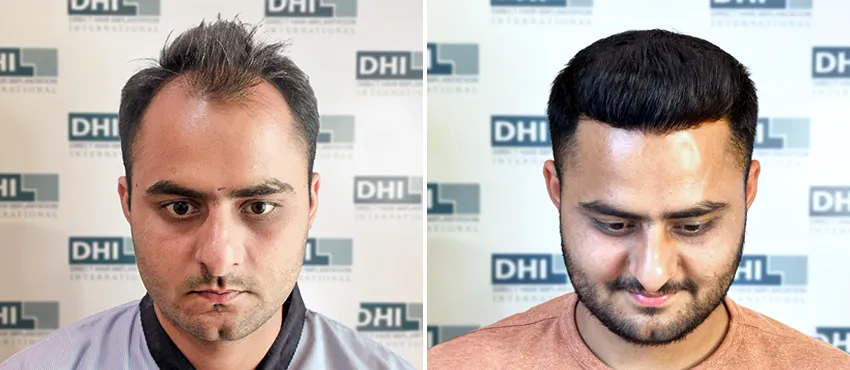
Whichever technique you choose, patience is important. Some shedding during the first few weeks is normal, followed by gradual new growth over the following months. Asking your doctor for hair transplant results before-and-after pictures can also give you a better idea of how natural the hairline and density may look. A transplant cannot prevent future hair loss or create extremely dense hair overnight, but a well-planned procedure can provide controlled, natural-looking growth.
Hair Transplant Recovery and Downtime
Most people can ease back into their usual routine within a few days of having a hair transplant, although recovery time can vary from person to person. If you choose DHI®, the downtime is minimal. Some patients resume their usual activities within 24 hours or return to work the next day, as there are no cuts or stitches to heal. FUE has a relatively longer recovery period compared to DHI® , though you may notice small, round marks in the donor area as it heals. FUT takes longer to heal because the strip wound needs time to close, and the donor area requires more care during recovery and there is permanent scarring.
Whichever method you choose, follow these precautions to get the best results:
- Wash your scalp exactly as your surgeon instructs
- Keep strenuous activity limited in the early weeks
- Attend every follow-up appointment
- Follow all post-op instructions carefully
Think of the early weeks as part of the procedure, because careful aftercare directly affects graft survival. All of this holds only when you follow every instruction and stick to your post-op care plan.
Choose DHI® for Your Hair Restoration Journey
Choosing the best hair transplant clinic is about more than the procedure itself. The technique used, safety standards, and the experience of the medical team all matter when deciding where to have your treatment.
DHI® clinics follow a structured medical approach focused on direct implantation, careful graft placement and achieving natural-looking density. At DHI®, procedures are carried out in line with international safety standards recognized by ISO and the UK Care Quality Commission (UK CQC). Experienced surgeons are involved throughout the procedure, with surgical work carried out by surgeons rather than technicians. DHI® surgeons receive rigorous training and certification through the London Hair Restoration Training Academy (LHRTA). This training helps ensure that patients receive care based on established hair restoration techniques and international medical standards, from the initial consultation through to the procedure itself. DHI® Medical Group Clinic in Delhi is the first and only hair transplant clinic in India to receive NABH accreditation, reflecting its commitment to established healthcare standards.
For anyone considering a hair transplant in India, DHI® clinics offer a reliable option for safe, effective treatment. Book an appointment today!