
Does a Hair Transplant Hurt? Pain, Anesthesia and Recovery Explained
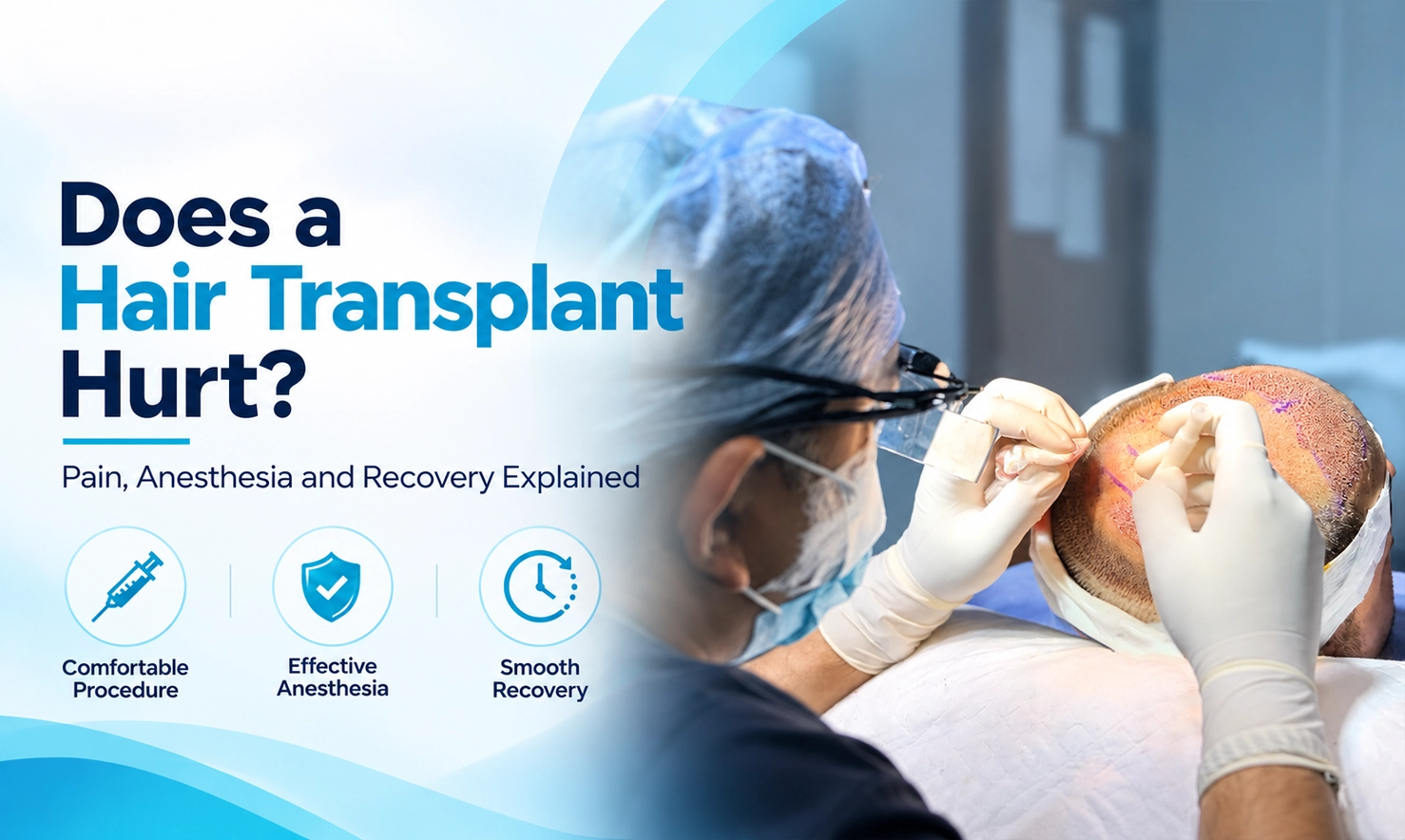
Fear of pain stops many people from going ahead with a hair transplant. If you’ve ever searched “Does a hair transplant hurt?”, you’re not alone. The honest answer is that the procedure itself involves little discomfort, and the days after are usually mild and manageable.
So, when it comes to a hair transplant, does it hurt? Let’s find out how you feel during the procedure, in the first few days, and over the following weeks.
What You May Feel During the Procedure
A hair transplant is performed under local anesthesia. This means only your scalp is numbed, and you stay awake and comfortable throughout. The only discomfort is the first round of anesthetic injections, which feels like a quick pinch or sting that lasts a few seconds. Once the scalp is numb, you should feel at most pressure or light touch. So, will a hair transplant hurt while it is being done? Very little, if at all. Depending on the number of grafts, the procedure can take several hours, with breaks in between. During the procedure, most people read, watch a movie, or listen to music. If you feel any discomfort, let your doctor know. Additional anesthesia can be administered if needed.
What to Expect After the Anesthesia Wears Off
Once the numbness fades, usually within a few hours, you may feel mild soreness or a pulling sensation on the scalp. Will a hair transplant hurt at this point? Mildly, and most people describe it as manageable. Your doctor may prescribe painkillers for the first few days.
Some swelling is also common and part of normal hair transplant surgery recovery time. It often appears on the forehead around the second or third day and settles within a week. Sleeping with your head raised helps. The donor area may feel numb or tingly for a while, but this usually passes.
Why Pain Levels May Differ
Two people may undergo the same procedure yet have different experiences. Several factors can contribute to this variation.
- Your individual pain tolerance
- The number of grafts and duration of the procedure
- The technique used and the doctor’s expertise
- Anxiety about needles, which can make sensations feel stronger
Tell your doctor about any anxiety or past reactions to anesthesia before the procedure. This helps your doctor take appropriate steps to keep you comfortable.
What to Expect During Recovery
Recovery after a hair transplant takes place in several stages.
- Days 1 to 3: Mild soreness and swelling. Rest as advised.
- Weeks 1 to 2: Scabs form and fall off, and redness fades.
- Months 1 to 3: Transplanted hairs shed. This is normal.
- Months 3 to 5: Fine, new hairs begin to appear.
- Months 6 to 12: Hair thickens, and the result matures.
The shedding worries many people, but it is a normal part of the hair transplant recovery timeline. The follicles remain in the scalp and continue to regrow hair.
How Long Does Recovery Take?
Your hair transplant surgery recovery time depends on the technique used, the number of grafts implanted, and how closely you follow your doctor’s advice. Visible healing is usually quicker than people expect. Many people return to desk work within a few days, once scabs and swelling are manageable. Exercise, swimming, and heavy lifting usually need to wait, so ask your doctor when it is safe to resume these activities.
Simple Aftercare Rules to Protect Your Results
Good hair transplant aftercare helps minimize discomfort and protect the grafts. Follow these basic rules along with your doctor’s instructions.
- Sleep with your head raised for the first few nights.
- Do not scratch, rub, or pick at scabs.
- Gently wash your scalp, only as advised.
- Protect your scalp from direct sun and heavy sweating.
- Take prescribed medication on time.
- Avoid smoking and alcohol while you heal.
When to Call Your Doctor
Mild discomfort is normal. However, worsening pain, heavy bleeding, pus, fever, or spreading redness may indicate a problem. Part of good hair transplant aftercare is knowing when to seek medical advice, so contact your doctor right away if you notice any of these symptoms.
Why Choose DHI® for Your Hair Transplant?
With over 56 years of hair restoration expertise, DHI® is India’s first NABH-accredited hair transplant clinic. Hair transplant procedures use the patented DHI® Technique and are performed exclusively by surgeons certified through the London Hair Restoration Training Academy (LHRTA). Single-use instruments and strict hygiene protocols are followed throughout the procedure. With no cuts, stitches, or linear scars, the procedure involves minimal downtime and supports a smoother hair transplant recovery timeline, backed by a reported 97% graft survival rate.
Still wondering if a hair transplant hurts? Book a consultation with DHI® to learn more about the procedure and what to expect during recovery.