


Are Synthetic Hair Transplants Safe? The Real Science Behind Artificial Hair
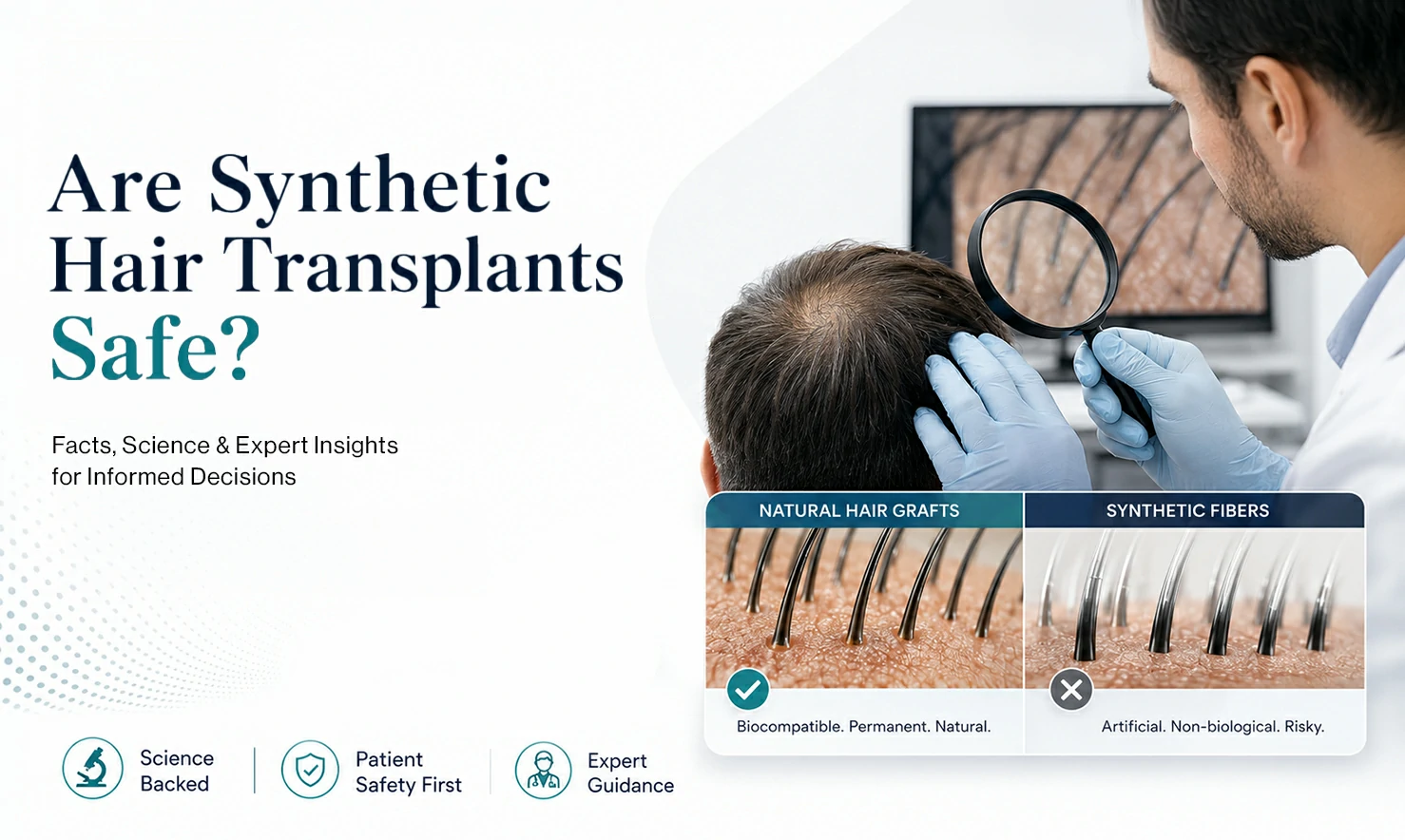
Hair loss can quickly wear down confidence, and that urgency has fueled a market for instant fixes. Among the options surfacing online is the synthetic hair transplant, a procedure that promises full density in one sitting without waiting months for natural growth.
Part of the appeal is the lower cost of synthetic hair transplants, often marketed as lower than that of a full procedure because no donor extraction is required. However, synthetic hair transplants are not a modern innovation comparable to FUE and DHI as an equally valid choice. Before considering this route, it helps to understand what it involves, why regulators moved against it, what safety in synthetic hair transplants really looks like, and what safer alternatives exist today.
What Is a Synthetic Hair Transplant?
A synthetic hair transplant, also called artificial hair implantation, involves implanting manufactured polymer-based fibers into the scalp to imitate the look of natural hair. Since no donor follicles or living tissue are used, a technician loads the fibers and places them directly into the scalp. Because the fibers do not grow, their length and style are fixed at the time of implantation.
People who seek this procedure usually want instant results. This includes those with advanced baldness who have little donor hair left for a traditional transplant, people who want to avoid a lengthy recovery and individuals drawn in by marketing that presents synthetic hair as permanent and low-effort.
Potential Risks and Complications
The core problem with synthetic fibers is that the body treats them as foreign material rather than living tissue. This leads to recurrent infections, cyst formation, and a scarring pattern known as central centrifugal cicatricial alopecia (CCCA). Patients have also experienced facial swelling, severe pain, scarring, permanent hair loss and, in some cases, scalp cancer.
Because the fibers are non-living, they never bond with the scalp the way real follicles do. Synthetic hair transplant before-and-after photos you see online generally capture the results immediately after the procedure, when density is clearly visible. What they don’t show is what happens months later, once fibers start shedding and complications kick in. That’s why synthetic hair transplant results look great at first but let people down later.
Why Synthetic Hair Fibers Were Banned in the United States
In 1983, the U.S. Food and Drug Administration banned the sale of hair fibers for scalp implants, one of the first times the FDA used its authority to pull a device off the market entirely. Between December 1978 and February 1981 alone, the FDA and the Federal Trade Commission received a combined total of 347 complaints about infections, facial swelling, severe pain, scarring and permanent hair loss, with many cases needing extensive medical treatment. The FDA then cited non-biocompatibility and deceptive marketing as reasons for not endorsing the procedure.
Synthetic Hair vs Natural Hair Transplant
The difference comes down to biology. Here’s how the two approaches compare side by side:
| Aspect | Natural Hair Transplant (FUE / DHI) | Synthetic Hair Transplant |
| Source of hair | Living follicles moved from a donor area | Manufactured synthetic fibers, no donor hair required |
| Growth | Continues growing for life in most cases | Does not grow; length and style are fixed during implantation |
| Hair cycle | Follows natural shedding and regrowth cycles | No natural cycle; fibers just sit in place |
| Body’s response | Integrates as living tissue | Treated as a permanent foreign object; the immune system can keep reacting to it |
| Appearance | Looks and blends seamlessly with surrounding natural hair | Can appear full at first but may not blend seamlessly in the long term |
| Complication/infection rate | Well under 1% in properly performed procedures | Significantly higher, since the body doesn’t accept the fibers |
Are There Better Alternatives to Synthetic Hair?
Several well-established options exist, backed by real clinical evidence.
- DHI hair transplant uses a specialized implanter tool to place individual living follicles directly into the scalp without first making incisions. Because the graft is transferred immediately after extraction, it spends less time outside the body, which may help improve its chances of survival.
- FUE (Follicular Unit Extraction) involves removing individual hair follicles from a donor area and placing those grafts in the thinning area.
- PRP (platelet-rich plasma) therapy uses a concentration of the patient’s own platelets to stimulate follicle activity. PRP is safe and can improve hair density, though results may vary depending on the preparation method.
- Combination treatments pair a hair transplant with procedures like microneedling or PRP. This is very common since addressing both hair loss and future thinning tends to produce more stable, visible results.
A synthetic hair transplant may seem like a quick fix, but it comes with major drawbacks. The artificial fibers need ongoing upkeep, can cause foreign-body reactions in some people, and won’t grow like natural hair. Knowing these limitations can help you make a more informed decision.
At DHI India, we use our patented DHI technique to restore hair using healthy hair follicles. The follicles are placed with precision to create natural-looking density while protecting your existing hair. DHI India operates under internationally recognized quality benchmarks, including ISO and the UK’s Care Quality Commission (CQC) standards. It is the first hair transplant clinic in India to receive NABH accreditation. Every treatment begins with a detailed scalp assessment, allowing specialists to recommend a personalized approach based on your hair loss pattern, scalp condition and expectations.
If you’re exploring your options, consult an experienced DHI specialist today.
FAQ (Frequently Asked Questions)
Q1: Is a synthetic hair transplant reversible?
Ans. Removing implanted synthetic fibers can be difficult and sometimes causes more scalp trauma than the original implantation. Anyone considering this route should treat it as a long-term commitment, not a trial.
Q2: How long do synthetic hair transplant results typically last?
Ans. Synthetic hair transplant results are permanent since fibers don’t grow or renew on their own. However, they often start to shed or break within a few years.
Q3: If someone has already had a synthetic hair transplant, can DHI still help?
Ans. In many cases, DHI Clinics can assess the scalp and existing hair to determine a safe path forward, though outcomes depend on the extent of scarring or damage from the earlier procedure. A personalized scalp assessment is the best starting point.
Q4: 4. What’s the recovery time after a synthetic hair transplant compared to FUE or DHI ?
Ans. Synthetic hair transplants typically have a shorter initial recovery since there’s no donor site to heal. Still, this shorter downtime carries a higher risk of long-term complications than FUE or DHI.