Thanks for contacting us! We will get in touch with you shortly.
How does a hair transplant work?
The Short Answer
During a hair transplant, hair follicles are carefully extracted from a
donor area and implanted
into the bald or thinning regions of the scalp. Once healed, the transplanted follicles begin to
grow natural hair, helping restore density and coverage.
A hair transplant works by transferring healthy hair follicles from a stable donor area to regions where hair growth has reduced or stopped.
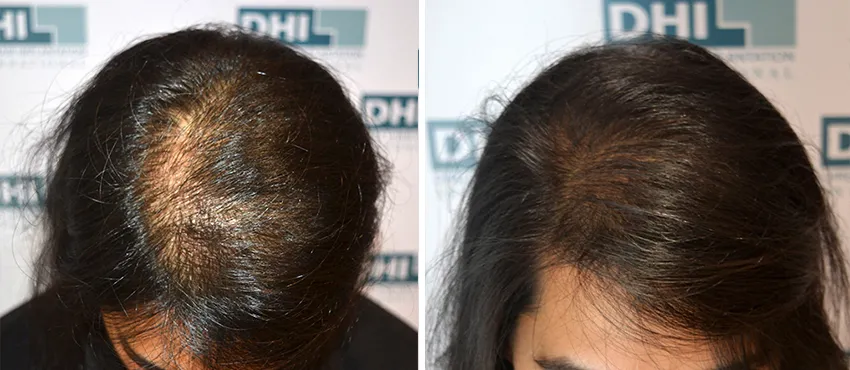
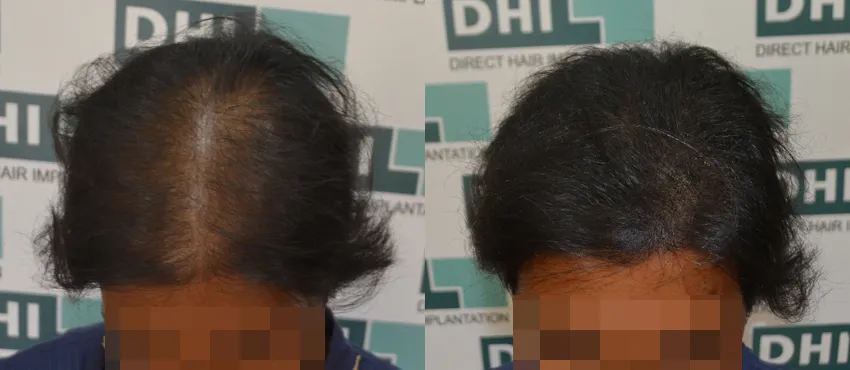
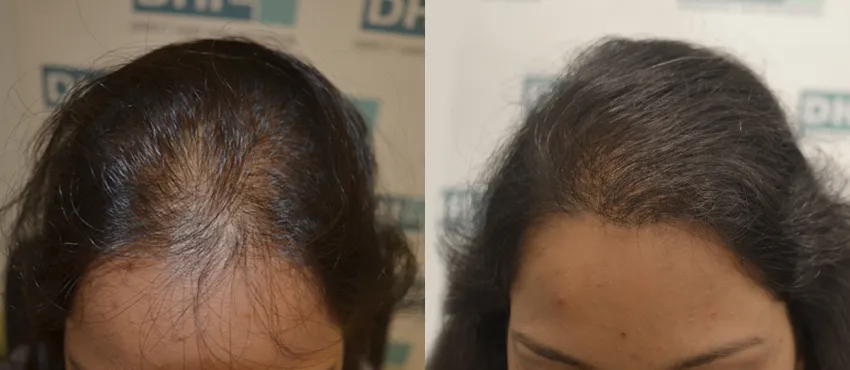
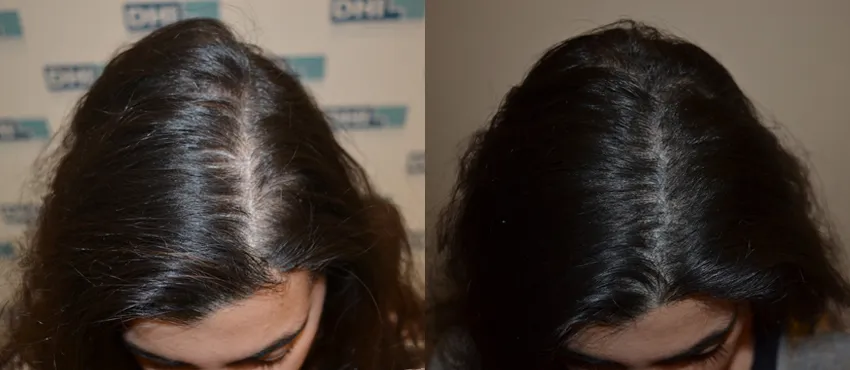
These follicles are implanted with precision so they establish blood supply in the new area. Once healing occurs, the transplanted follicles resume their normal growth cycle, producing hair that grows, sheds, and regrows like natural hair. Because the donor follicles are resistant to hair loss, the results are long-lasting and blend naturally with existing hair.
Why Choose DHI India for Your Hair Transplant?
The Long Answer
On a surface level, a hair transplant involves moving hair follicles from one part of your scalp (the donor area) to the balding or thinning region (the recipient area). However, the actual science behind it is much more complex. Careful planning and precise implantation techniques are used to maximize follicle survival.
It's the hair follicles on the scalp that are responsible for your hair growth. These hair follicles go through three distinct phases:
Anagen phase (active hair growth)
Catagen phase (transitional phase)
Telogen phase (resting phase)
A healthy hair cycle is essential for maintaining consistent hair growth over time.
Hair loss begins when hair follicles enter a prolonged telogen phase. During a hair transplant, the donor area is the part that is most resistant to the effects of dihydrotestosterone (DHT), a hormone primarily responsible for hair loss. When transplanted to balding areas, these DHT-resistant hair follicles retain this genetic characteristic. This ensures that the transplanted hair grows naturally in the recipient area, delivering long-lasting and sustainable results. This phenomenon is also known as donor dominance and forms the foundation of modern hair restoration techniques. This is why transplanted hair remains permanent even as surrounding hair continues to thin.
The success of the procedure also depends on angiogenesis and neovascularization, the process by which new blood vessels form in the recipient area. This process ensures that transplanted hair follicles receive the essential nutrients and oxygen for survival and growth. Proper healing and blood circulation are critical during the early recovery phase.