
Wearing a Hat or Helmet After a Hair Transplant: What You Need to Know
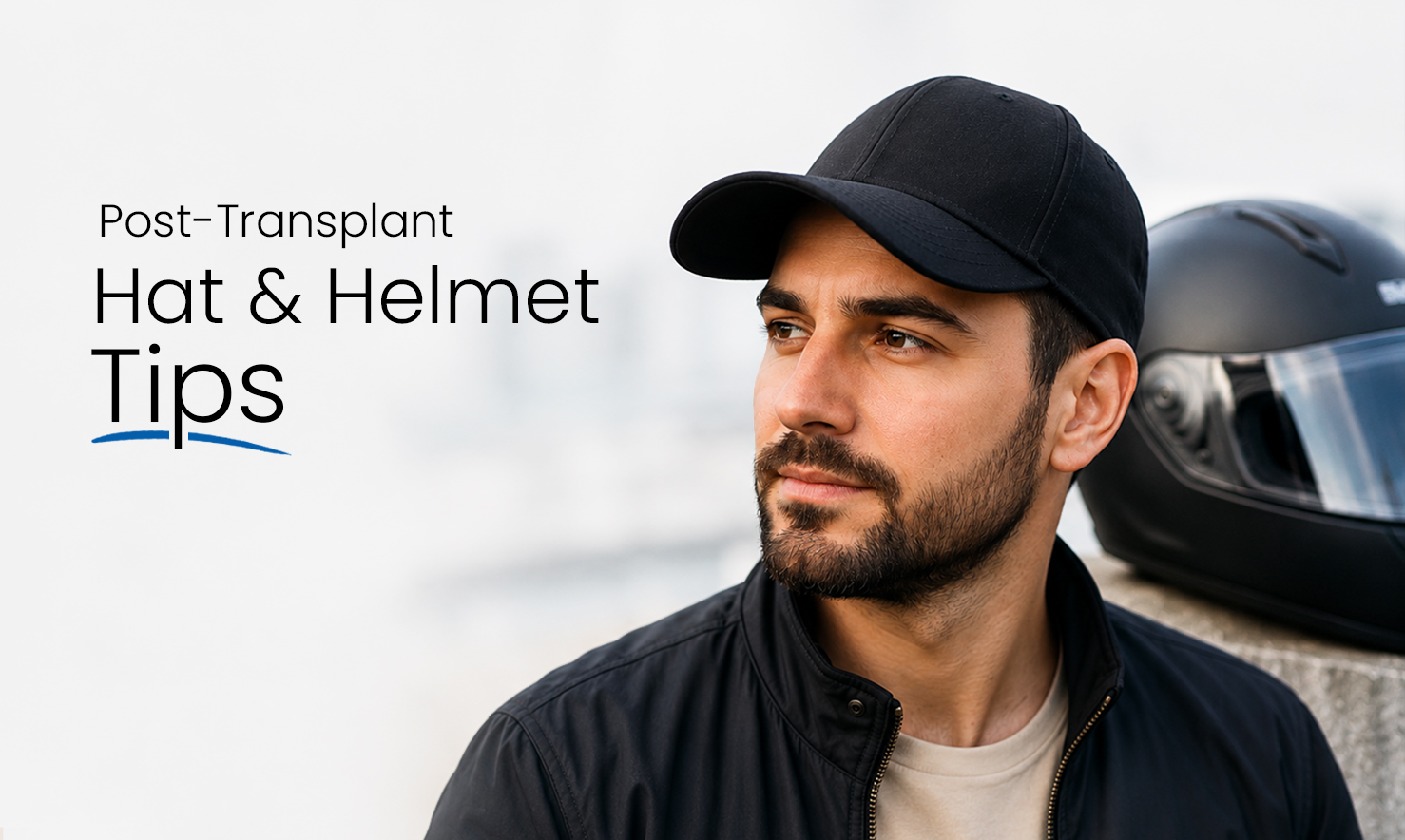
After a hair transplant, one of the most common questions patients have is whether they can cover their head. The answer is yes, but timing matters a great deal. What you wear on your head and when you wear it can affect graft survival and the quality of your final result.
This guide covers the full picture, from specific timelines for hats and helmets to the common mistakes that patients make during recovery.

Why the First Few Days Matter
During the first 48 to 72 hours, the transplanted grafts are at their most fragile. Any friction, pressure or displacement during this window can physically dislodge them, and a dislodged graft does not re-anchor.
This is why surgeons instruct patients to treat the first few days as the most protected period of recovery.
How Long to Avoid Hats After a Hair Transplant?
When can I wear a hat after a hair transplant? This common question does not have a definitive answer because it depends on how the individual’s scalp is healing. For instance, it is best to avoid wearing a cap after a hair transplant during the first 48 to 72 hours to support proper healing.
After that initial window, some surgeons permit wearing a hat after the hair transplant, gently over the scalp, provided it does not press down on the recipient area.
The Risks of Wearing a Helmet Too Soon
Patients asking “when can I wear a helmet after a hair transplant” need to understand that a helmet creates compression and friction across the scalp. Compression restricts blood flow to the grafts at precisely the time they need a well-oxygenated environment to establish themselves. Friction from the helmet lining can graze or catch on scabs and drag grafts out of their sites.
Those who frequently ask the surgeon, “Can I wear a motorcycle helmet after FUE?” should know that the vulnerabilities are the same regardless of the hair transplant technique used.
When Is It Safe to Wear a Helmet?
In most cases, surgeons advise waiting at least two weeks before returning to helmet use. Several factors influence the actual timeline for each individual:
- Extent of the transplant: A larger transplanted area means more active healing sites and a longer period of vulnerability.
- Number of grafts implanted: Higher graft counts correlate with a wider and denser recipient zone, which takes longer to fully stabilize.
- Scalp sensitivity: Some patients have naturally more reactive skin that takes longer to settle post-procedure.
- Healing progress: Scab formation and shedding vary from person to person. Until the scabs have completely shed, helmets carry risk.
Returning to helmet use before the scalp has adequately healed can increase the risk of irritation, discomfort and infection. For patients who rely on helmets for work or transport, the best approach is to plan the procedure during a period when helmet use can be minimized for two or more weeks.
How to Ensure Your Hair Transplant Is Done Right
The quality of your outcome is shaped not just by what you do during recovery, but also by the decisions you make before surgery. Here is a checklist for ensuring you are in the right hands at the right clinic.
Before the Procedure
- Verify accreditations independently: Look for certifications such as NABH, ISO or CQC accreditation.
- Review before-and-after results: Ask for a portfolio of patients with hair loss patterns similar to yours, not a curated selection of the clinic’s best cases.
- Confirm surgeon involvement at every step: Extraction and implantation should both be handled by the qualified surgeon, not delegated to technicians once the procedure begins.
Post Procedure
- Follow the post-op care instructions to the letter: Washing schedule, sleeping position, sun exposure and physical activity restrictions all affect graft survival.
- Do not pick at scabs: Scabs over the recipient area protect the grafts underneath. Picking at them, even accidentally during hat removal, can pull grafts out. Let them shed naturally.
- Be patient with the growth timeline: Transplanted hair typically sheds in the first month before re-entering the growth cycle. Visible results appear from month three and continue developing for up to twelve months.
Why DHI Is a Good Choice for Getting a Hair Transplant in India
Every patient’s recovery journey is unique, which is why following personalized medical advice is essential. At DHI India, patients receive detailed aftercare protocols and the team stays involved well beyond surgery day. If you are considering a hair transplant or have questions about the do’s and don’ts of a hair transplant, consulting an experienced hair restoration specialist is the most reliable way to make an informed decision.
DHI clinics follow a streamlined medical protocol built around precision at every stage. With NABH accreditation and recognized quality benchmarks that include ISO and the UK’s Care Quality Commission (CQC) standards, procedures are carried out under verified safety frameworks.
Whether your concern is the timeline for wearing a helmet after hair transplant or the full arc of recovery, the DHI team is equipped to walk you through every step. Book your consultation today and take the first step with a team that understands what it takes to achieve a successful recovery.
FAQ (Frequently Asked Questions)
1. When can I wear a hat after a hair transplant?
Avoid hats completely for the first 48–72 hours. After that, a loose, soft hat that sits above the recipient area without touching or pressing the grafts may be permitted but always confirm with your DHI surgeon first, as timing depends on your individual healing progress.
2. When can I wear a helmet after a hair transplant?
If your work or commute requires a helmet daily, plan your procedure during a period when you can avoid helmet use for at least 14 days post-surgery.
3. Can I wear a motorcycle helmet after FUE?
The risks are the same regardless of technique – FUE or DHI. A motorcycle helmet creates both compression and friction across the scalp, which can disrupt grafts and restrict blood flow during the critical healing window. Wait until your DHI surgeon clears you, typically at the two-week follow-up.
4. What happens if I wear a hat too soon?
Wearing a hat too early risks physically dislodging grafts through friction or pressure. A dislodged graft cannot re-anchor. Even accidentally catching a hat on a scab during removal can pull a graft out which is why timing and the type of headwear both matter.
5. When do scabs fall off after a hair transplant?
Scabs typically shed naturally within 7–14 days. Do not pick at them or allow headwear to catch on them. Once all scabs have shed and your surgeon confirms the recipient area is stable, helmet use can be gradually reintroduced.